
Necro-politics in Practice: How COVID-19 turned migrants into the “Living Dead” in South Africa
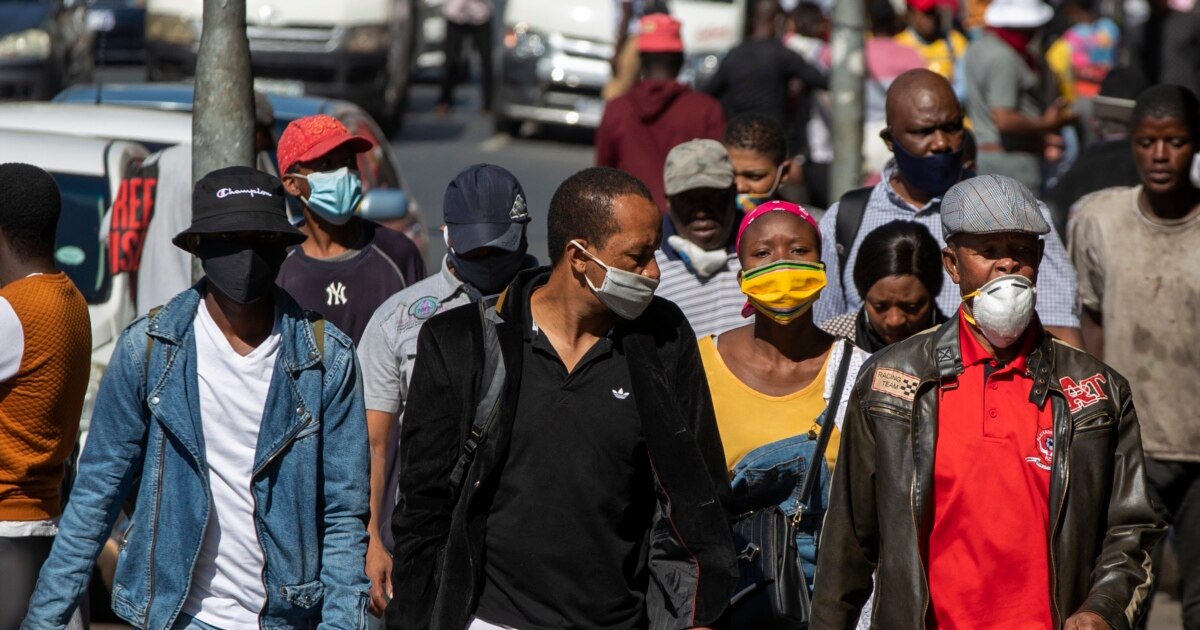
On 23 March 2020, President Cyril Ramaphosa announced a nationwide lockdown as a response to the covid-19 cases recorded in 2020 and within 18 days, infections rose to 402. The lockdown was presented as a decisive move to protect the lives of citizens. But for many migrants in South Africa the pandemic response revealed a system that quietly decides who’s lives mattered. Drawing from the study done by Mutekwe and Chiwarawara in the African Human Mobility Review (Paddington Mutekwe & Kenny Chiwarawara, 2025), the articles tell a story on how necropolitics operates through healthcare exclusion, transforming migrants into what Achille Mbembe refers to as the “living dead” (Achille Mbembe, 2023).
The theory: Necropolitics and the power to let die
Achille Mbembe introduced the concept of necropolitics to explain how sovereign power determines who may live and who must die (Achille Mbembe, 2003). Achilles argues that the sovereign power is not only about managing lives, but about determining who lives and who doesn’t. Necropolitics refers to when the government uses its authority to expose certain populations to unbearable conditions, not directly but through abandonment, exclusion and the withdrawal of protection. It’s operating on the basis of defining who matters and who doesn’t (Achille Mbembe, 2003).
During the early stages of the pandemic, getting tested for migrants living in south Africa was nearly not possible because most forms requested that one must have a south African ID Number. According to Mutekwe and Chiwarawara (Paddington Mutekwe & Kenny Chiwarawara, 2025), civil society actors had to oppose this requirement because it excluded documented and undocumented migrants. Many officials claim that healthcare was available to everyone but administratively it tells a different story. These systemic actions could be referred to as necropolitics, how? The government did not publicly announce exclusion but instead embedded it within the administrative processes, making migrants invisible to the healthcare system.
This exclusion from public healthcare has pushed more migrants to rely on private healthcare for assistance, even without medical aid and they fear being mistreated in public healthcare facilities. One of the participants in the study said: “I would rather take my last money and go to a private doctor” (Janine A White & Laetitia C Rispel, 2021). The fact that migrants were pushed into making such decisions reveals how necropolitics operate economically. Denial of healthcare to migrants was not formally made, instead migrants were pushed into having to pay for survival and those who couldn’t afford to pay stayed home and some of them sadly passed away
In Achilles’s paper he makes reference to the term “kept alive but in a state of injury” (Achille Mbembe, 2023). This statement speaks to the lived experiences of many migrants during COVID-19 in South Africa, by not explicitly denying access to their basic rights of getting healthcare but by systemically denying them access to their basic rights.
The pandemic exposed the systemic xenophobic actions that are not just embedded within the country’s response to the pandemic but many other issues. Necropolitics is about the power to define who matters and who does not, and in COVID-19 that definition was not written in law, but in forms, delays, silence and oxygen lines.
References
Achille Mbembe. (2003). Necropolitics. Retrieved from Mirror: https://mirror.explodie.org/Public%20Culture-2003-Mbembe-11-40.pdf
Achille Mbembe. (2003). Necropolitics. Public Culture, https://mirror.explodie.org/Public%20Culture-2003-Mbembe-11-40.pdf.
Achille Mbembe. (2023). Mirror. Necropolitics, 21. Retrieved from https://mirror.explodie.org/Public%20Culture-2003-Mbembe-11-40.pdf
Janine A White & Laetitia C Rispel. (2021, April 13). Policy exclusion or confusion? Perspectives on universal health coverage for migrants and refugees in South Africa . Retrieved from Oxford Academy: https://academic.oup.com/heapol/article/36/8/1292/6225002
Paddington Mutekwe & Kenny Chiwarawara. (2025, December). AHMR volume 11 number 3 September-December 2025. Retrieved from SIHMA: https://sihma.org.za/storage/journals/AHMR%2011:3%203.%20Necropolitics%20and%20Slow%20Violence-%20Revisiting%20Migrants%E2%80%99%20Access%20to%20Healthcare%20During%20the%20COVID-19%20Pandemic%20in%20South%20Africa.pdf
Categories:
Tags:
- Media Resources Human Mobility Africa.
- Migration Think Tanks Africa Partnership
- Refugee Protection Framework South Africa
- Country Of Origin Migration Analysis Africa
- Labour Migration Rights South Africa Legal
- Climate Change And Migration Africa
- Research Data For Journalists Africa Migration
- Reporters Resource Migration Africa
- Migration Policy South Africa SADC Region
- Immigration Law South Africa Updates 2025
- Empowering Migrants In Africa
- Refugee Community Case Studies SA
- Documentation Support For Asylum Seekers SA
- Xenophobia In South Africa Research
- Human Trafficking Resources Africa
- Refugee Integration Programs South Africa
- Immigrant Legal Support Information South Africa
- African Migrant Students Opportunities South Africa
- Migrant Rights South Africa 2025
- Rights Of Refugees In South Africa
- Human Mobility Report Africa Download
- Migration Think Tank South Africa
- Academic Research On Migration In Africa
- Refugee Labour Market Studies South Africa
- Migration Policy Africa Analysis
- Forced Migration Research South Africa
- Displacement Statistics Africa
- Migration Data Africa 2025
- Human Mobility In Africa Studies
- African Migration Research Institute