

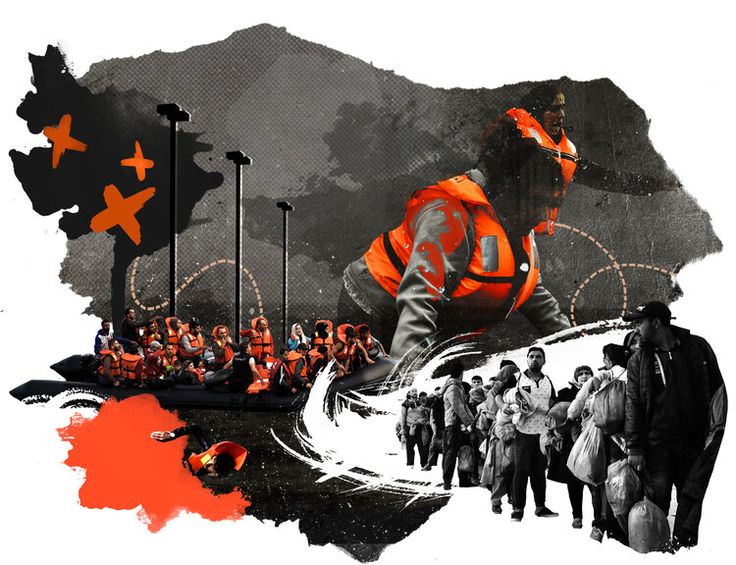
NEWLY PUBLISHED ARTICLE: Gaps in the Implementation of the Non-Prima Facie Refugee Status Determination in Uganda
As millions of refugees fleeing conflict and instability, Uganda stands out as one of the friendliest nations amid an evolving global displacement environment (Frank Ahimbisibwe & Milena Belloni, 2024). The procedure of determining non-prima facie refugee status, is less common but vital component of refugee protection. The non-prima facie path requires individual asylum seekers to prove their case, often in urban context and under far more complex conditions than the prima facie approach, which quickly gives refuge to large groups escaping recognized conflicts (Alison Ryan, 2018).
The African Human Mobility Review recently published a article by Chinyakata, Momasoh, Clacherty, and Ferraro, 2025. This article was drawn from the research component of the Enhancing Protection and Asylum, a project funded by the European Union and implemented through the ICMPD. The article highlights the limitations and challenges in implementing this strategy into practice in Uganda The results raise significant worries regarding human rights, access to justice, and the reassurance of refugee protection institutions; they are not merely procedural issues. This study serves as a crucial reminder to scholars, decision-makers, and institutional leaders that a refugee protection regime's success is determined by its ability to protect people who enter outside of existing structures as well as by its ability to handle massive influxes (Alison Ryan, 2018).
This research’s emphasis on the relationship between lived experience, policy, and the law is what makes it so compelling. The study illustrates ways in which the rights that Uganda's laws are intended to guard can be unintentionally compromised by regulatory conditions, procedural hold- ups, and structural constraints. These compliances are not limited to Uganda, they're applicable throughout Africa and the world, where humanitarian commitments and security considerations are decreasingly balanced in migration governance (Rachel Chinyakata, Cletus Muluh Momasoh, Glynis Clacherty, and Filippo Ferraro, 2024).
The ramifications for policymakers are obvious: the non-prima facie process cannot be given less attention. Flaws in its processes directly affect asylum seekers' integration, legal clarity, and access to protection (Alison Ryan, 2018). Beyond standard legal textbooks, the study gives researchers more chances to look into how refugee law fits into actual implementation. Apart from that, it highlights the urgent need to strengthen the often-overlooked systems that are crucial for fulfilling international commitments for stakeholders and organisations working in the protection of refugees and asylum seekers (UNHCR, 2020).
This study encourages a redefining of the process of determining refugee status determination rather than just establishing difficulties. It demands institutional responsibility, policy invention, and substantiation- grounded converse. The stakes are high it is not only fairly needed but also innocently needed to guarantee that all asylum seekers, whether they arrive in huge figures or collectively, admit fair and prompt protection. (Rachel Chinyakata, Cletus Muluh Momasoh, Glynis Clacherty, and Filippo Ferraro, 2024)
Considering stakeholder interviews and framed by a human rights-based views, the entire report presents an in-depth investigation. Engaging with this article is crucial for anybody involved in disaster relief, change in institutions, or immigration policy. It is about the future of refugee protection systems worldwide, not just about Uganda.
👉 Read the full article : https://sihma.org.za/storage/journals/AHMR%2011:3%202.%20Gaps%20in%20the%20Implementation%20of%20the%20Non-Prima%20Facie%20Refugee%20Status%20Determination%20in%20Uganda.pdf
References
Alison Ryan. (2018). REFUGEE STATUS DETERMINATION: A study of the process in uganda . Retrieved from Norwegian Refugee Council: https://www.nrc.no/globalassets/pdf/reports/refugee-status-determination/refugee-status-determination---a-study-of-the-process-in-uganda.pdf#:~:text=The%20aim%20of%20the%20research%20is%20to,asylum%20seekers%20attending%2C%20includ%2D%20ing%2070%20women.
Frank Ahimbisibwe & Milena Belloni. (2024, 04 03). The 2006 Refugees Act in Uganda: Analyzing the Gap between Law and Practice. Retrieved from Afriche.e.orienti: https://www.africheorienti.com/journal/article/view/57#:~:text=Abstract,allowed%20to%20access%20their%20rights.
Rachel Chinyakata, Cletus Muluh Momasoh, Glynis Clacherty, and Filippo Ferraro. (2024, December ). Gaps in the Implementation of the Non-Prima Facie Refugee Status Determination in Uganda. Retrieved from SIHMA: https://sihma.org.za/journal/ahmr-volume-11-number-3-september-december-2025-1
UNHCR. (2020). Procedural Standards for Refugee Status Determination under UNHCR's Mandate. Retrieved from UNHCR: https://www.unhcr.org/media/procedural-standards-refugee-status-determination-under-unhcrs-mandate
Categories:
Tags:
- Media Resources Human Mobility Africa.
- Migration Think Tanks Africa Partnership
- Refugee Protection Framework South Africa
- Country Of Origin Migration Analysis Africa
- Labour Migration Rights South Africa Legal
- Climate Change And Migration Africa
- Research Data For Journalists Africa Migration
- Reporters Resource Migration Africa
- Migration Policy South Africa SADC Region
- Immigration Law South Africa Updates 2025
- Empowering Migrants In Africa
- Refugee Community Case Studies SA
- Documentation Support For Asylum Seekers SA
- Xenophobia In South Africa Research
- Human Trafficking Resources Africa
- Refugee Integration Programs South Africa
- Immigrant Legal Support Information South Africa
- African Migrant Students Opportunities South Africa
- Migrant Rights South Africa 2025
- Rights Of Refugees In South Africa
- Human Mobility Report Africa Download
- Migration Think Tank South Africa
- Academic Research On Migration In Africa
- Refugee Labour Market Studies South Africa
- Migration Policy Africa Analysis
- Forced Migration Research South Africa
- Displacement Statistics Africa
- Migration Data Africa 2025
- Human Mobility In Africa Studies
- African Migration Research Institute